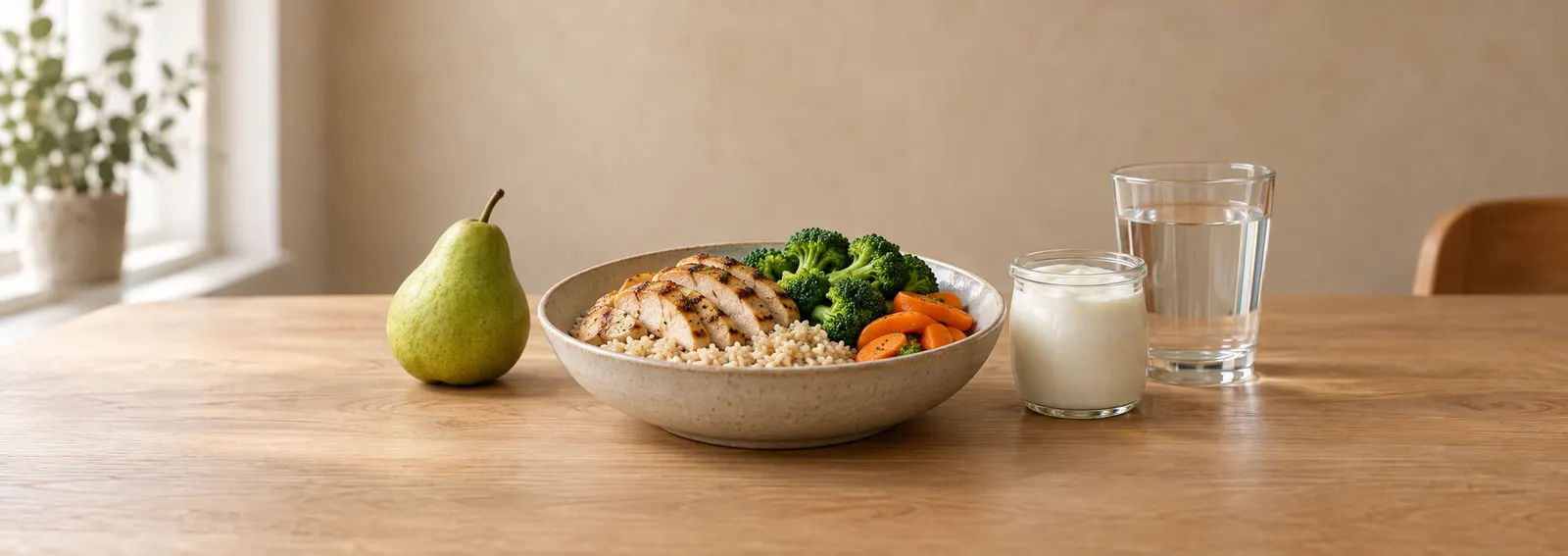
A bowl of brown rice with sliced grilled chicken, broccoli, and carrots beside a green pear, a jar of plain yogurt, and a glass of water on an oak table in soft window light
All articles

GERD

GERD-friendly diet: what to eat, what to limit, and a sample day

A GERD-friendly diet leans on lean protein, whole grains, vegetables, and less acidic fruit, eaten in smaller meals and finished two to three hours before bed. Beyond that, the most useful step is finding the few foods that set off your own reflux.

What is a GERD-friendly diet?

A GERD-friendly diet is built from lower-fat, lower-acid foods, eaten in smaller meals and finished well before bed, minus the few foods that set off your own reflux. It is less a strict menu than a set of habits.

The pieces that matter most:

  • What you eat: lean protein, whole grains, vegetables, and fruit that is not very acidic.
  • How much you eat: moderate portions, so the stomach is never packed full.
  • When you eat: the last meal two to three hours before lying down.
  • What you personally skip: the handful of foods that reliably bring on your symptoms, not every food on every list.

The American College of Gastroenterology's 2022 GERD guideline takes the same line: avoid meals in the two to three hours before bed and avoid foods that trigger your symptoms, rather than cutting a long list of foods for everyone.

What foods can you eat with GERD?

Most people with GERD do well with plain, lower-fat whole foods. These are the groups a GERD-friendly diet usually leans on:

  • Lean protein. Chicken or turkey without the skin, fish, eggs, tofu, and beans or lentils if they sit well with you. Bake, grill, poach, or steam rather than fry.
  • Whole grains and starches. Oatmeal, brown rice, whole-grain bread, quinoa, and potatoes cooked without much butter or cream.
  • Vegetables. Green beans, broccoli, carrots, zucchini, leafy greens, cucumber, and sweet potatoes.
  • Less acidic fruit. Bananas, melons, pears, and apples are easier for most people than citrus or pineapple.
  • Fats in small amounts. A little olive oil, avocado, or a few nuts, rather than fried food or heavy sauces.
  • Lower-fat dairy or alternatives. Low-fat yogurt and milk, or unsweetened plant milks.
  • Gentle drinks. Water and caffeine-free herbal teas such as chamomile. Skip peppermint tea, which can relax the valve at the top of the stomach.

Safe for most, not for everyone

Even "safe" foods bother some people, and some "trigger" foods are fine for others. agni finds which foods affect your reflux by matching what you eat to how you feel afterward.

Join the waitlist

The first 100 to confirm get a year free.

What should you limit on a GERD diet?

The foods most often worth limiting are fatty and fried food, alcohol, coffee, chocolate, peppermint, spicy food, citrus, tomato sauce, and fizzy drinks. Each one either relaxes the valve at the top of the stomach, slows how fast the stomach empties, or stings an irritated esophagus.

You probably do not react to all of them. Our guide to GERD trigger foods explains why each one can cause trouble and how to tell which are yours.

Why do meal size and timing matter so much?

Meal size and timing matter because a full stomach and a flat body both make it easier for acid to rise, no matter what the meal contained.

  • Stretch triggers brief valve openings. When the stomach is stretched by a large meal, the valve at its top relaxes briefly more often. Those short openings are one of the main ways acid gets into the esophagus.
  • Fat keeps the stomach full longer. Rich meals empty more slowly, so there is more in the stomach for longer.
  • Lying down removes gravity. A meal eaten close to bed is still in the stomach when you lie flat.

That is why the same plate of pasta can be fine at noon and a problem at 10 pm. If your symptoms mostly come at night, see our guide to acid reflux at night.

What does a GERD-friendly day of eating look like?

A GERD-friendly day spreads food across smaller meals, keeps fat moderate, flavors with herbs instead of chili, and ends dinner early. Here is one example to adapt, not a prescription:

  • Breakfast (7:30 am): oatmeal made with low-fat milk or a plant milk, topped with sliced banana and a spoon of chopped walnuts.
  • Snack (10:30 am): a pear and a small pot of plain low-fat yogurt.
  • Lunch (12:30 pm): grilled chicken on brown rice with steamed broccoli and carrots, dressed with a little olive oil and fresh herbs.
  • Snack (3:30 pm): a slice of whole-grain toast with a thin layer of avocado, or a few slices of melon.
  • Dinner (6:30 pm): baked salmon or tofu, a baked potato with a spoon of yogurt, and green beans. Done at least two to three hours before bed.
  • Evening: water or chamomile tea, sipped rather than gulped.

Swap in foods you enjoy from the same groups. A diet you can keep up does more than a perfect one you drop in a week. A registered dietitian can tailor a plan to you, especially if you have other conditions or are trying to lose weight.

How can you tell if a food really bothers you?

The clearest way to know is to test one suspected food at a time while the rest of your eating stays steady, and note how you feel in the next few hours. Reflux usually shows up within about 15 minutes to 3 hours of eating.

  1. Settle on a baseline. Eat mostly from the list above for a week or two and note your usual symptoms.
  2. Pick one suspect. Coffee, say, or tomato sauce. Have a normal portion earlier in the day, so bedtime does not muddy the result.
  3. Write down the time and what you felt. Heartburn, regurgitation, a sour taste, or nothing at all, within three hours.
  4. Repeat two or three times on different days before you decide. One bad evening can be chance.

Our guide to keeping a food and symptom diary covers what to log so the pattern is easy to read. agni does the matching for you: it looks for reflux in that window after each meal and tells you how sure it is about each food.

When to see a doctor

Diet changes help many people, but they are not a substitute for a diagnosis. Talk to a doctor if you have heartburn twice a week or more, or if symptoms continue despite changes to what and when you eat. Get care promptly for trouble or pain when swallowing, persistent vomiting, black or bloody stools, unexplained weight loss, or symptoms that wake you at night. Chest pain can be a heart problem, so do not assume it is reflux.

This article is general information, not medical advice.

Common questions

What foods should I eat if I have acid reflux?

Lean protein, oatmeal and other whole grains, vegetables, and less acidic fruit such as bananas, melons, and pears suit most people. Keep portions moderate and cook with little fat.

What are some examples of non-acidic fruits?

Bananas, melons such as cantaloupe and honeydew, pears, and most apples are lower in acid than oranges, grapefruit, lemons, and pineapple.

Is honey good for heartburn?

There is little good evidence that honey eases heartburn. A small amount is unlikely to cause trouble for most people, so if you want to know, test it like any other food.

Is a bland diet the same as a GERD diet?

Not quite. A GERD-friendly diet can be full of flavor from herbs, and it focuses on fat, portion size, timing, and your own triggers rather than making everything plain.

Can I still drink coffee with GERD?

Many people can, and some cannot. Try a smaller cup earlier in the day, or decaf, and note whether reflux follows within a few hours.

Build a GERD diet around your own triggers

Built with dietitians and gastroenterologists

agni is an iPhone app that finds your gut triggers by matching what you eat to how you feel. Log meals and reflux in a few taps, see which foods sit well, and bring a report to your doctor. See how agni works for GERD.

Join the waitlist

The first 100 to confirm get a year free.